Method AC-01
Acoustic Listening
Ref AC-01
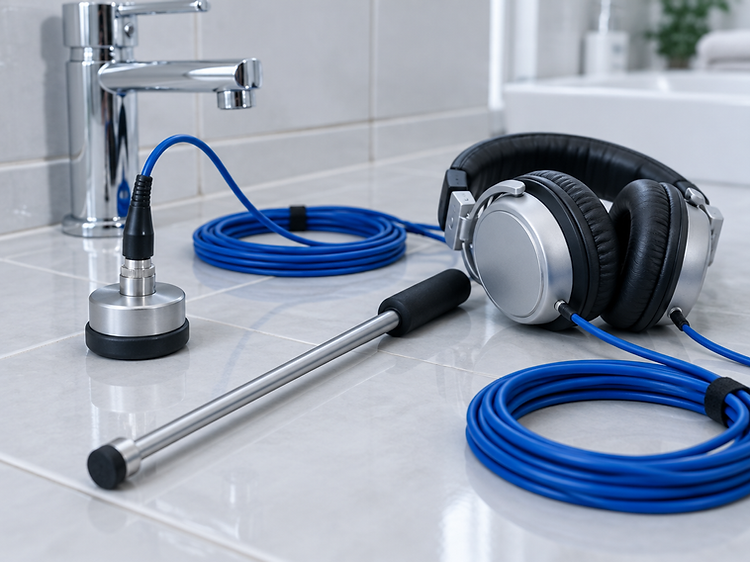
Water escaping a pressurised pipe makes noise. Acoustic detection amplifies that noise at the surface, filters out traffic and plumbing interference, and lets the technician compare intensity across a grid to close in on the leak. It is the most reliable single method for metallic and rigid plastic lines.
How it is applied
Four controlled steps
- 01
Pressurise the zone
The suspect line is isolated and brought to normal working pressure, because an unpressurised leak makes no usable sound.
- 02
Sweep the surface
A ground microphone or listening stick is moved in a grid over the floor, wall or paving while the signal is monitored.
- 03
Filter and compare
Frequencies are filtered per surface type, and readings are compared rather than judged from a single listening point.
- 04
Correlate and mark
Two sensors on either side of the suspect section allow the noise source to be calculated and marked on the surface.
Best applied to
- Pressurised water lines in walls and floors
- Metallic and rigid plastic pipework
- Underground lines beneath paving or lawns
- Confirming a thermal or moisture finding
Limits and conditions
Soft ground, very deep pipework and high background noise reduce accuracy. We combine acoustic work with thermal or tracer gas where conditions demand it.
Used for these services
Other methods
FAQ
Acoustic Listening questions
Still unsure? Call the 24/7 line or send a WhatsApp and describe what you are seeing — we will tell you what test is needed.
Does acoustic detection work on plastic pipes?
Yes, though the signal is weaker than on metal. Slower sweeps and correlation are used to compensate.
How quiet does the site need to be?
Quieter is better, but filtering removes most traffic and electrical noise. We often schedule commercial sweeps outside peak hours.
Is acoustic detection safe for occupied homes?
Yes. It is entirely non-invasive — nothing is opened or disturbed during the survey.
24/7 dispatch · 069 268 0988
Book the method that fits the symptom
Tell us what you are seeing. We confirm the test needed, agree the fee and find the leak — with a written report and your no-find-no-fee guarantee.