Method TH-02
Thermal Imaging
Ref TH-02
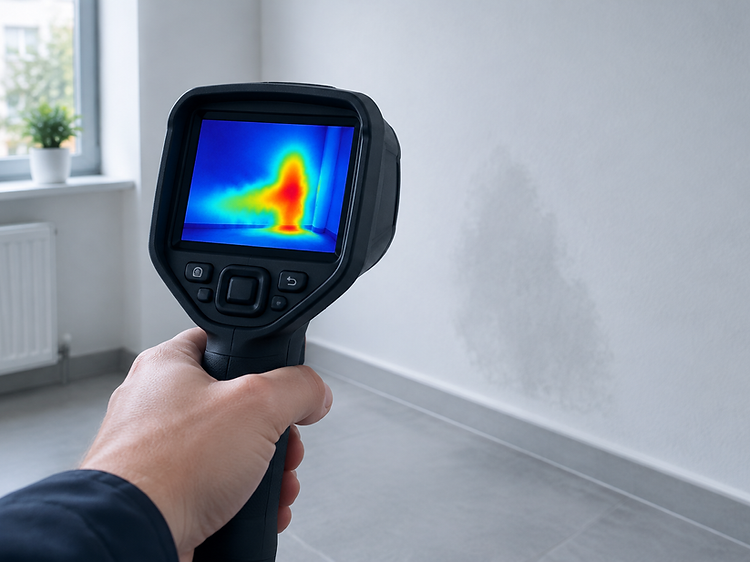
Escaping water changes the temperature of the surface above it. A thermal camera reads that difference without touching the structure, which makes it ideal for scanning large wall and floor areas quickly before narrowing down with acoustic work. Thermal images also give your insurer an image they can read instantly.
How it is applied
Four controlled steps
- 01
Establish a baseline
Ambient conditions, sun loading and recent water use are noted so normal temperature patterns are not mistaken for leaks.
- 02
Scan the suspect area
Walls, floors and ceilings are scanned in overlapping passes, looking for cool streaks and warm plumes.
- 03
Confirm the pattern
A leak signature is confirmed by its shape and behaviour — a hot-water leak warms, a cold supply leak cools and evaporates.
- 04
Capture evidence
Radiometric images are captured with temperature references and included in the written report.
Best applied to
- Hot-water and geyser line faults
- Under-tile slab leaks
- Damp and moisture mapping across large areas
- Ceiling and roof-space inspections
Limits and conditions
Thermal imaging shows temperature, not water. It must be interpreted alongside pressure and acoustic data — which is why we never rely on a heat picture alone.
Used for these services
Other methods
FAQ
Thermal Imaging questions
Still unsure? Call the 24/7 line or send a WhatsApp and describe what you are seeing — we will tell you what test is needed.
Can thermal imaging see through walls?
No. It reads surface temperature. The contrast created by escaping water is what makes the leak visible on the surface.
When is the best time for a thermal survey?
Early morning, before sun loading warms the structure, gives the cleanest contrast on external walls and floors.
Do insurers accept thermal images as evidence?
They are widely accepted. Our reports include the images alongside pressure test results and a written finding.
24/7 dispatch · 069 268 0988
Book the method that fits the symptom
Tell us what you are seeing. We confirm the test needed, agree the fee and find the leak — with a written report and your no-find-no-fee guarantee.