Method TG-03
Tracer Gas
Ref TG-03
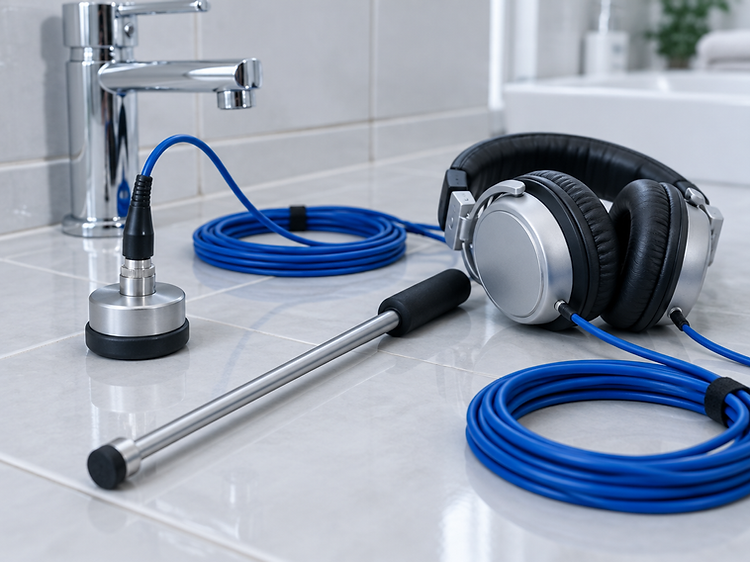
Some leaks are silent: low-pressure lines, drains, underground pipework beneath soft soil, and pipes that cannot hold enough pressure to generate noise. Tracer gas is introduced into the isolated section and detected at the surface as it escapes, giving a location where sound and heat give nothing usable.
How it is applied
Four controlled steps
- 01
Isolate the section
The suspect pipe is drained and isolated so the gas stays inside the section under test.
- 02
Introduce the tracer
A non-flammable, non-toxic gas mixture is introduced at controlled low pressure.
- 03
Scan the surface
A calibrated detector is swept across the line, with readings logged along the route.
- 04
Mark and report
The highest concentration point is marked and recorded as the excavation or access point.
Best applied to
- Low-pressure and gravity lines
- Underground pipework under soft ground
- Drains and sewer connections
- Leaks that give no usable acoustic signal
Limits and conditions
Requires a well-sealed section to be effective, and gas dispersal in very loose or waterlogged ground can widen the indicated area.
Used for these services
Other methods
FAQ
Tracer Gas questions
Still unsure? Call the 24/7 line or send a WhatsApp and describe what you are seeing — we will tell you what test is needed.
Is tracer gas safe in a home?
Yes. We use a non-flammable, non-toxic mixture at low pressure inside an isolated pipe, and ventilate the area as standard.
Why use gas instead of listening?
Where a line cannot hold pressure or is too deep or soft to transmit sound, gas reaches the surface and can still be detected.
Can tracer gas find drain leaks?
Yes. It is commonly used on drains and sewer lines, often combined with CCTV inspection.
24/7 dispatch · 069 268 0988
Book the method that fits the symptom
Tell us what you are seeing. We confirm the test needed, agree the fee and find the leak — with a written report and your no-find-no-fee guarantee.